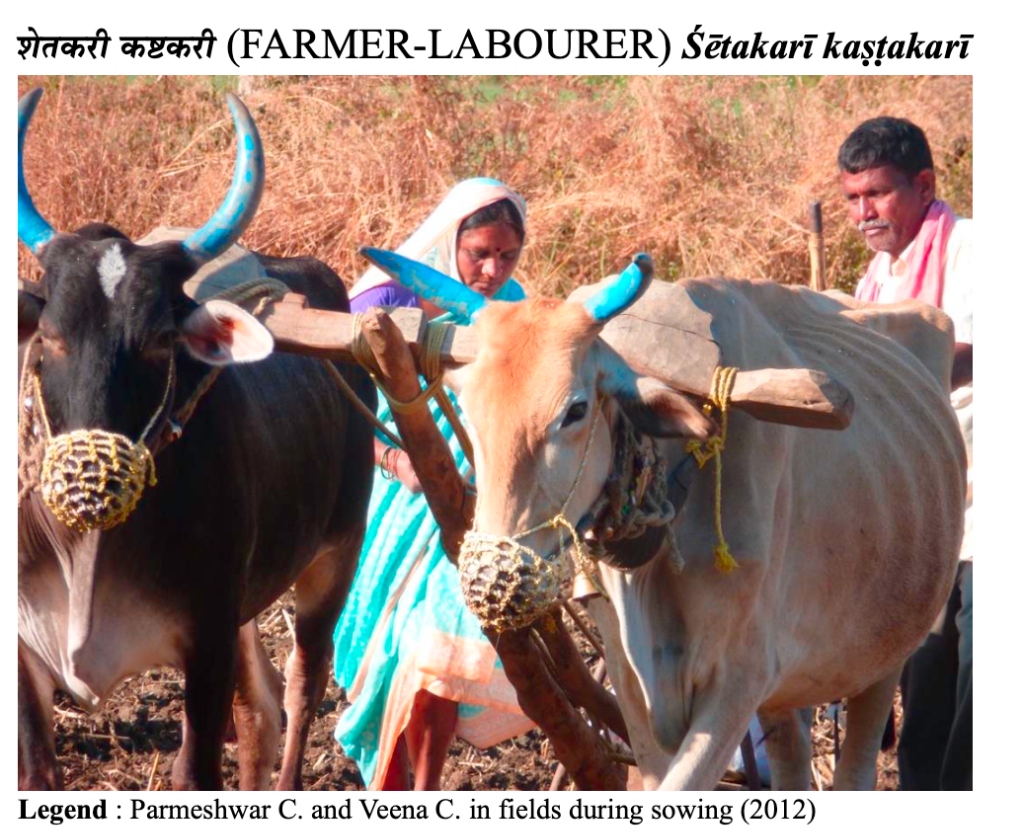
Parmeshwar and Veena C. are not merely characters in a documentary. They are the documentary's moral centre — a farmer-labourer couple whose daily existence contains within it the entire spectrum of India's agrarian crisis. Their blue-painted oxen, their calloused hands, the determined set of Veena's jaw as she guides the plough — these are not staged compositions. They are truths that breathe.
In Vidarbha, the word "farmer" carries a weight that no English translation can fully bear. Śētakarī kaṣṭakarī — farmer-labourer — acknowledges that to work the land here is not a pastoral idyll but a form of endurance. The monsoon is both saviour and tyrant. The market is indifferent. The moneylender is patient only in his collection.
This pillar follows the rhythms of the agricultural year through Parmeshwar and Veena's lives — from the hopeful sowing to the anxious waiting, from the harvest's brief relief to the long reckoning of debt. It is a portrait not of victimhood, but of a stubborn, beautiful refusal to surrender.